Escape From Algotrash
We are incarcerated within a totalitarian, pervasive technosphere. Pinned down in a cold, dark place by algorithmic bars. A hermetic regime. Is there a way out?
A reflection on AI psychosis, the impossibility of escaping the technological system, and finding freedom nonetheless.

Figure 1: Alcatraz
The prison of Alcatraz was infamous for its brutal, soul-shattering regime and high security. Surrounded by frigid waters ruled by strong tides, escape was considered impossible. That didn’t stop people from trying to break out.
Lessons from getting the word out
My piece AI is a toxic menace was a smash hit on LinkedIn. Well, relative to my usual near-invisibility that is. For weeks, LinkedIn kept coming back to me with vanity metrics about views, people reached, new followers and the like. The dopamine machine. But let’s get real: thousands of “views” means that people scrolled by without reading. Actual reads and comments, two orders of magnitude less.
Human connection over vanity metrics
The real impact happened away from social media. Three people from my network, whom I hadn’t caught up with in years, contacted me. One even came to visit me in person. It was a pleasure to reconnect and have some deep conversations about AI, open source, and the world in general.
Lesson one: the actually meaningful impact of the work I put into that post, is not measured on LinkedIn analytics. It’s measured in deep conversations and human contact.
Controversy sells
Lesson two is of course that age-old adage: controversy sells. Algorithms reward hot takes. That’s actually a problem. Prioritizing spicy black and white takes, over nuanced grey zone discussions, degrades our collective capacity to meaningfully deliberate at scale. That’s a fancy way of saying: social media are bad for democracy.
I really worry about that in the context of open source communities. Conflicting perspectives on using AI, risk fracturing communities, just when we need open source to provide alternatives to US dominance in software. The last thing we need right now is another flame war leading to more forks.
Developer experience
Let’s get to the meat: lesson three: developer productivity. I had anecdotally heard, from a senior developer who knows his shit, that he’d done absolutely amazing things with Claude Code over the Christmas holiday. I’ll spare you the technical details, but the sheer audacity of what he pulled off is genuinely impressive.
One of the ex-colleagues who contacted me, drove home the same message: something happened around November/December 2025; a phase shift in LLM coding quality. (sidenote: I should note that Ed Zitron sounds the alarm, that much of that hype was engineered by Anthropic. ) I see it on social media as well, an unease about the consequences of AI centric development workflows, for the craft of software engineering. People asking themselves if they should leave the field now.
Time to put on my biohazard suite and get dirty.
Down the rabbit hole

Figure 2: Alice in Wonderland
First off, a disclaimer: this is not a software engineering blog. I won’t burden you with the nerdy details of my craft.
Still, we’re talking about technology here. A supposedly breakthrough technology. Which is supposed to really shine in exactly my field, software development. I’m treading a thin line here, trying to translate for a general audience, what is happening in AI technology, especially as applied to software engineering, which is obviously a technology field itself.
What I’m trying to say, is that the whole topic is intrinsically nerdy. Geeks rule the world by now. In the famous phrase of a famous asshole, software is eating the world.
And, god damn! How embarrassing.
In theory, there is no difference between theory and practice; but in practice, there is.
After doing an intense deep dive the past months into the technical foundations of large language model technology and economics—which I reported upon in AI is a toxic menace and Resisting AI whiplash in open source—my conclusion was: this is never going to work. It might seem to work. But it actually won’t.
Well, I was wrong. (sidenote: In retrospect: not so wrong after all. See my comments further down. ) The theoretical analysis is still valid: the underlying technology has fundamental weaknesses, the unit economics are atrocious, the ethics are horrific, the psychological effects potentially devastating. All of that is still true. But, oh my God, the stuff has become really good. Much better than last time I looked, some months ago.
Fucking unbelievably good, that stuff. It catches bugs and edge cases I hadn’t even thought about. The speed, breadth and depth with which it navigates and analyses software libraries is a game changer. It sometimes overengineers, and I need to stay totally focused to catch it, when it starts goofing off with wrong assumptions or conclusions. But after the significant investment I made to train it, to reason across my stack, it is able to plan and execute complex change sets in a coordinated and coherent fashion, across many files crossing multiple project boundaries.
AI psychosis
Give a shiny toy to a technologist, and he can’t help himself. He has to play. Guilty as charged. I got sucked in pretty deep. Spending sometimes upwards of €100 per day, those first days, using the agentic AI to customize itself and optimize it for my specific workflows and environment. I’m happy to report I’m not seeing those cost levels any more—I guess that initial investment paid off. And I did invest heavily in security hardening my setup as well, making sure the AI cannot change files behind my back.
It’s genuinely a different way of working, vibe coding. I have to force myself to not delete the previous sentence. Never thought I’d say that. But there it is. All those derisive snorts, when people used the term. Fuck me.
Agentic AI is a genuine productivity speed-up, if used right. It feels like going from rowing a boat, to having an outboard engine. A terrible, planet-burning, people-shredding engine, for sure. But it does make you go faster. If you use it right.
The obvious way of coping with that cognitive dissonance, is to then claim: I’m different. I’m so special. It’s still a broken technology but I can make it work, because I’m so incredibly gifted and skilled. The difficulty with that argument, is that it on the one hand may indicate the onset of AI psychosis, while on the other hand there’s some truth to it. I am pretty well positioned, to work with this stuff. I took my first programming course so long ago, that I’m embarrassed to mention the actual year. 1979. Like, I’m ancient by now. I’ve seen it all and can smell bad code in a second. But of course the same is true for lots of other guys (yes they are nearly always guys) in my age bracket and industry.
And I did go over the top rather radically. Once I’m doing something really complex and challenging and, well, exciting, I cannot stop. That’s not specific to using AI. It’s how I’m wired. Once I’m deep into a coding project, all of its intricacies loaded into my brain, I have to get it out into the world. I will work until late at night on a challenging problem, then wake up early in the morning with the solution pre-baked and clear in my mind, as if waking up to the smell of fresh bread. Lovely, but exhausting.
Ten days of that is not good.
The getaway

Figure 3: Tranquillity in France
What broke the spell, was a long weekend getaway to France. A friend of ours bought an old farm there, with her new partner. We went to visit them and check out the place. Just sitting in the car, driving into France, already started to create some distance from the unhealthy dynamic I’d been sucked in to.
Just half a day, and you’re in a different world. Rural. Old. Slow. Quiet. Our friends’ house was built in 1761. You touch base with an older, slower, much sustainable way of life. People have been living there for, what, 10 generations? In a community that’s been there for centuries, living a way of life that in many ways made more sense, than the mad speed and vertigo of the 21st century.
Something is wrong
We all know something is fundamentally amiss nowadays. I mentioned to our friend, how much more beautiful their old and outdated house is, compared to the real estate you see advertised back home—slick, hard, modern, expensive, soulless. She looked me in the eye and said, “we completely lost the plot somewhere”.
This sense, that something is fundamentally amiss, is widespread. Just in my circle of family and friends, I can count three couples who decided to uproot and move to rural France, in the past five years. For some, that’s a retirement move: they’re properly moneyed to smoothen that transition. For others, it’s a more desperate gambit: they burned out in The Netherlands and are burning their bridges behind them, in an attempt to find a different life that works better, even if that requires a drastically lowered standard of material comfort.
I’m leaving!
Myself, I’m neither moneyed nor desperate enough to make such a switch. I want to stay close to my offspring, and also I’m a tech guy, not temperamentally suited to fix up dilapidated properties or enjoy working the land.
But many others do make that jump. Enough, actually, that there’s a Dutch TV show about the topic: “Ik vertrek” — I’m leaving! Currently in its 27th season, it’s almost a running gag. An infinite supply of Dutch people unhappy about the climate and society, who try to start a new life in Latin countries where life’s supposed to be better.
Wherever you go, there you are
Cue hidden defects in the properties bought, business plans exposed as mere wishful thinking on first contact with reality, money running out, and exasperated paper fights with foreign bureaucracies. The adventure often culminates in stress, homesickness, and divorce.
As Jon Kabat-Zinn says: wherever you go, there you are.
All that drama is good for the TV ratings, obviously.
Why does our society drive us crazy?
Successful as the reality TV show is, it’s format focus on personal drama manages to miss the key dynamic driving this whole trend: the societal failings that make people choose these radical moves. It’s just an endless succession of Johnny and Sally making audacious choices and having to face Odyssean obstacles.
Never ever does this format zoom out and ask the really interesting questions: how come you can make a TV show about people trying to escape the rat race, and keep that show running for 27 years straight? What is it in our society, that these people are trying to get away from? Why is the “back to nature” vibe so appealing?
Deeper questions about sociology and politics are taboo, to the point of unthinkable. The focus on the personal is so relentless, that it actively obscures the bigger picture. It’s all about the juice, never about the pattern.
Social networks
There’s also a more subtle point lost in this focus exclusively on the nuclear family, this mid-20th century invention. It misses the importance of wider social networks: both the support networks left behind, and the importance of finding new networks in your new home.
On arriving in France this spring, my initial response was: beautiful old farm in an interesting old village; nice for a weekend getaway but it would drive me crazy to live here all year. Implicit in that assessment is, knowing that while a hermit existence has its appeals to me, it’s not in the end what I would want to live. But that whole assumption turns out to be wrong.
Beyond rugged individualism
Our friend’s property is a ten-minute drive away from Ecolonie, a Dutch founded New Age community.
For the consciously living person who really wants to give meaning to concepts such as sustainability, community, spirituality, creativity, ecology and social responsibility.
The area is full of people like them, who moved from The Netherlands into the area. They are not necessarily tied to the community, but the community seems to work as some kind of focal point, an attractor for alternative people looking for a deeper way of life in the French countryside. My friends are in a Whatsapp group covering something like a 100km radius, with scores of like-minded people living the same values.
Hearing that, shifted my mental image about what it means to move to France. It’s not about getting away from the hectic rat race, to then pursue a Robinson Crusoe lifestyle of rugged individualism. That would be self-defeating, right? From one individualist struggle to the next. But no, the real shift is, to slow down in the company of other like-minded people making the same shift.
That is a meaningful strategy to foster resilience in the face of societal breakdown, ladies and gentlemen: to strengthen local and wider-region mutual support networks. The necessity of finding those networks may be more acute when moving to a different country, but you can find and nurture such networks also without the drastic step of an emigration. It’s just that slowing down and shifting your mindset is harder, when you’re embedded in a familiar environment that reinforces old routines.
No escape?
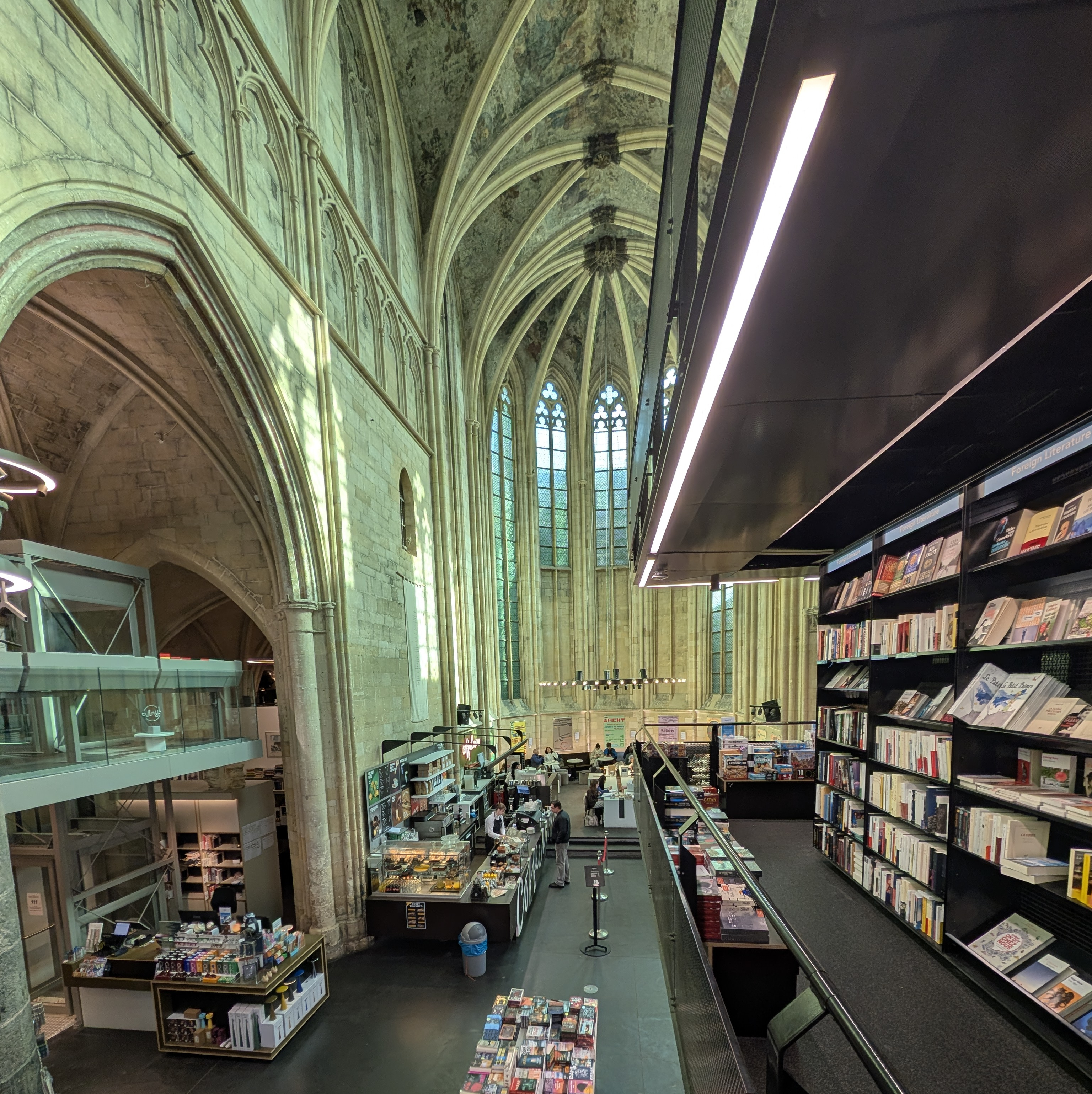
Figure 4: The most beautiful bookshop in the world
Going to France is nice. But is that really an escape from our 21st century crazy world? Can we truly escape the grip of modern life?
Somebody who’s been thinking deeply about our dead-end culture and how to live an alternative way of life, is Paul Kingsnorth. I know him as the co-founder of Dark Mountain, and the co-author of Uncivilization: The Dark Mountain Manifesto (Kingsnorth and Hine 2019).
From my office, it is a mere five minutes to the most beautiful bookshop in the world, and I regularly saunter over there, to peruse books and drink a latte on the former altar.
Seeing Kingsnorth’s new book Against the Machine (Kingsnorth 2025) showcased there, it’s like they put it there specifically for me; the topics he’s engaging with greatly overlap with the focus of this blog, Dark Edge, and I’ve written about the way Dark Mountain inspired me before.
Local bookshop versus Amazon
Paradoxically enough, the fact that this book was showcased the way it was, is all the more valuable, because it was obviously not put there specifically for me. This is a real bookshop, that looks the same for every visitor, unlike Amazon, where god knows what algorithm is tweaking and personalizing the webshop in order to wring the maximal amount of business out of me personally. Having Kingsnorth prominently displayed is a social proof: I’m not alone in thinking and worrying about these topics, apparently there’s enough of us in my hometown to warrant promoting a whole stack of this book.
Human algorithm
To make this really explicit: my local bookshop shows a selection of books curated by a human, which is a very different algorithm from Amazon’s sales machine. It’s an older way of doing things. It reflects an older way of living that is under great pressure from Amazon’s steamroller.
The bookshop went bankrupt, unable to compete against e-books. That it is now still a thriving bookshop is a miracle: a combination of management buyout (where the people staffing the bookshop bought the bookshop), and a loyal local audience, of which I’m one.
The convenience trap
I root for that bookshop. I love it. But. I buy nearly all my books at Amazon, despite knowing that Amazon is an evil empire. The reasons for that are multiple.
- Range is a factor
- Amazon’s unmatched depth of choice.
- Speed
- Instant delivery.
- Cost
- Electrons are still a bit cheaper than dead trees.
- More significantly: space
- After decades of buying paper books, I’ve had to discard most of them on moving house. I simply do not have the physical shelf space to match the voracity of my reading.
- There’s travel convenience
- Having my full library at my fingertips while on the move, in a 200 gram ereader, is unbeatable.
- And then there’s productivity
- I have scripts to export my highlights and notes directly from my Kindle into my personal knowledge management system —the same system I’m writing this blog post in— giving me searchable, link-able access to all my highlights and notes throughout all my references.
- To top it off there’s ergonomics
- A lightweight, backlit e-ink screen with zoomable type is much more gentle on my ageing eyes than a paperback.
My point being: it’s fiendishly hard to escape the algorithm machine. It casts a web of a thousand nearly invisible conveniences, with which it binds you into its grip.
The price of resistance
But I did buy a hardcopy of Against The Machine in my local bookshop, and brought the book with me to France. Seemed very appropriate. How do we resist this terrible machine of technocratic modernity? What better source to bring with me, on a retreat to rural France?
Having bought a hardcopy, I could not highlight in Kindle, and broke my long-standing habit of not soiling books: I started highlighting with markers and scribbling margin notes with pencil. Then I had to manually transcribe my highlights to capture them into my PKM system—and in doing so discovered new passages to highlight in chapters I’d already read, something that wouldn’t have happened when simply importing highlights and notes from Kindle.
Then I got stuck doing that: too much work. Instead of spending the Sunday writing this piece, as I had intended to, I spent all day processing quotes into my PKM.
Which is part of the point I’m trying to make here: technology captures us in conveniences; stepping back from technology implies a reversion to more labor-intensive processes, and giving up on certain affordances altogether.
The Machine
The topic of The Machine, the titular concern of this book, starts out promising:
you are living in a metastising machine which is closing in around you, polluting your skies and your woods and your past and your imagination.
This expresses a feeling I share, and that I think is widespread: our society is on a dead end trajectory, powers beyond our individual control are destroying the life on our planet. It’s a dis-ease which I personally think explains a lot of the far-right turn in our politics. Everybody can smell things are not OK. The key questions then are: how did it come to this? And: how do we get out? In other words: analysis, and remedy.
Where did we go wrong?
In my own thinking about the climate catastrophe, I’m most interested in The Great Acceleration that happened in the middle of the twentieth century. The great majority of both CO2 emissions and biodiversity loss happened in the past decades. The claustrophobic grip of technology on our lives has greatly accelerated during my lifetime, too.
Kingsnorth places the moment when things went wrong further back: at the start of the Enlightenment. This ties in with his religious preoccupation, to which I’ll return later.
The West, in short, was Christendom. But Christendom died. What does that make us, its descendants, living amongst its beautiful ruins? It makes ours a culture with no sacred order. And this is a dangerous place to be.
A mechanical view of history
Kingsnorth’s analysis, and the key image he uses of The Machine, builds on work by Mumford, whose ultimate formulation was published in 1971, but which Mumford already developed in the 1930s (Mumford 1971).
Mumford by now reads as pretty dated. I cannot read the following, without hearing a sonorous, slightly clipped, slightly pedantic 1960s American TV voice-over.
With this new ‘megatechnics’ the dominant minority will create a uniform, all-enveloping, super-planetary structure, designed for automatic operation. Instead of functioning actively as an autonomous personality, man will become a passive, purposeless, machine-conditioned animal whose proper functions, as technicians now interpret man’s role, will either be fed into the machine or strictly limited and controlled for the benefit of de-personalized, collective organizations.
This Machine analogy places the onset of our predicament much further back in time: even way before the Enlightenment. Mumford takes Pharaonic Egypt as an example of an already fully developed Machine, a machine whose moving parts are humans. In other words, we took the wrong road as a species already thousands of years ago, at exactly the point where (unwritten) pre-history became (written) history.
Did the Pharaohs cause the climate catastrophe?
Now, I love macrohistory, but what is the explanatory power, of a theory that postulates the onset of our problems in Pharaonic Egypt? How does it shed light on the specific dynamics, that are causing the climate catastrophe right now, in this weird high-tech societal structure that Klein calls “capitalism’s techno-necro stage” (Klein 2023)? What kind of theory of change can we derive, what kind of intellectual tools for fighting the polycrisis, when the fight has been ongoing for millennia already?
Interestingly though, other sources I’m reading, actually support timing the onset of our problems with the onset of civilization — or even earlier.
Goliath is older than the Pharaos
In Goliath’s Curse, Luke Kemp argues that dominance hierarchies, like Pharaonic Egypt, are the source of our problems (Kemp 2025). Bosses bossing other people around, concentrating wealth and power at the cost of other people’s wellbeing.
Yet Kemp traces the onset of dominance hierarchies—what he calls: Goliath—back even further, to the start of the Holocene.
Anthropologists imagine a spectrum of foragers, from nomadic to sedentary, peaceful to warlike, equal to unequal. Nomadic egalitarian foragers are at one end, hierarchical sedentary hunter-gatherers at the other. Hierarchical hunter-gatherers are ancient. The first conclusive evidence for them is around 12,500–10,800 BCE. This is when the earth began to warm and exit the ice age.
That sounds a lot, as if our cursed predicament is baked into our species. But Kemp actually argues for a more hopeful perspective, to which I’ll return below.
The Technological System
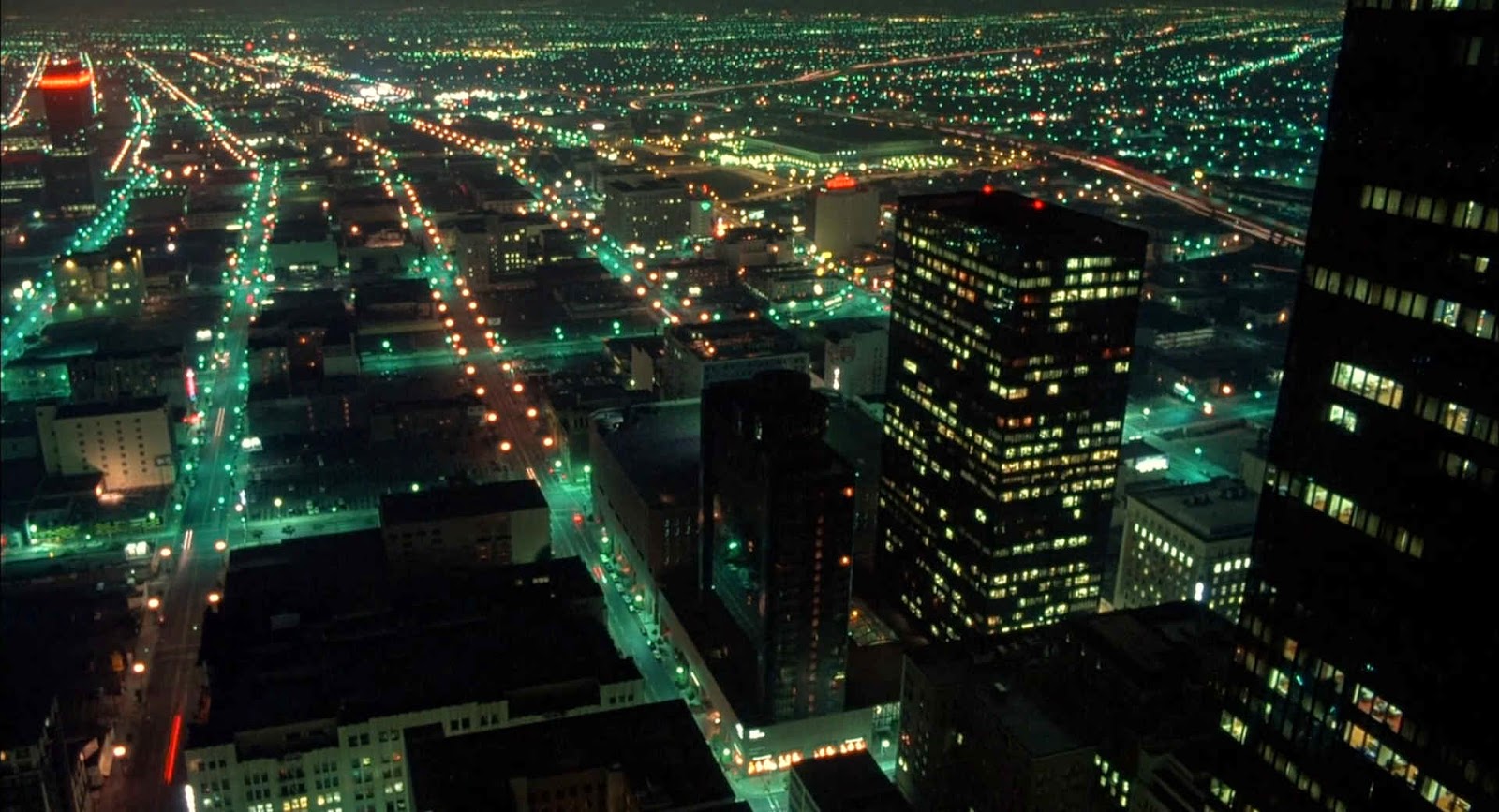
Figure 5: Still from Koyaanisqatsi (1982)
Jacques Ellul evokes more contemporary images of networks, chaos, contradictions and loops, to describe our enclosure in hegemonic technological systems.
Writing in the 1970s, he seems to already anticipate social media:
The computer gathers a cluster of previously scattered information about each individual, making the control of society unbearable, especially since this control will be exercised not just by “authorities,” but also by the public, the “others,” by public opinion. This is so because everything concerning each individual can be diffused and revealed to everyone else by telecommunications.
Ellul explicitly refutes Mumford’s top-down deterministic machine paradigm.
It is clear that no society has ever functioned in that way. It is an illusion to believe that Babylonian or Aztec society was a mechanism.
It is highly dangerous to make use of such an apocalyptic vision. It is really quite easy to prove with facts that our society is not mechanized. On the one hand, it is full of short circuits, jammings, chaos, and also huge nontechnicized voids; on the other hand, man in this society has not really been mechanized to the point of being just a gear.
The technological society is one in which a technological system has been installed. But it is not itself that system, and there is tension between the two of them. Not only tension, but perhaps disarray and conflict. And just as the machine causes disturbances and disorders in the natural environment and imperils the ecology, so too the technological system causes disorders, irrationalities, incoherences in the society and challenges the sociological environment.
This phrasing is more messy, yet also more nuanced and precise than invoking a top-down machine that somehow exists since the Pharaohs. To me, that’s more powerful and useful as an analytical tool.
Instead of an impervious mega-machine steamrollering all resistance—resistance is futile—, Ellul’s phrasing foregrounds an imperfect, noisy, inconsistent logic circuitry that is intrinsically buggy, and as such invites hacking: fighting back by exploiting the cracks in the system.
Is resistance futile?
All of this suggests, that technology has become an all-encompassing reality, propagating dominance hierarchies that are as old as the written word, if not older. In this light, getting away to a rural France does not represent a real escape. It’s just a simulation of escape; more often than not facilitated by privilege built up within the very systems of technological control and dominance you’re trying to get away from.
To add insult to injury, the supposedly bucolic lifestyle you’re escaping into, is actually a remnant of a feudal society of great inequality and suffering.
Is there no getting away from any of this?
Finding freedom

Figure 6: Life flourishes even in the desert
Resisting this Machine, what Ellul calls The Technological System, requires radical shifts in consciousness and paradigm. It requires a restoration of balance between nature and humans, which is itself a tricky phrase: humans are nature. But as humans we’re destroying the more-than-human world.
We need a radical reappraisal of the vitality and importance of our living planet. Not as a base for human star-travel, not as a source of raw materials and dump for the toxic exhaust of our ‘civilization’ — but as a vibrant, holy universe in its own right.
Spirituality
Ellul was deeply religious, as were Ivan Illich and as is Godfrey Reggio, who directed Koyaanisqatsi (see still above) and is still alive. All three progressive Catholics, their work is interrelated (van Boeckel 2015).
Kingsnorth also centers religion, but unlike the three aforementioned progressive Catholics, Kingsnorth’s take appears to be more reactionary: he’s converted to Orthodox Christianity, and his text contains rants against wokeism and for borders and roots that are, how to put this: concerning, in the absence of an explicit reflection, on how much this starts to smell like Blut und Boden.
It’s an old criticism levelled against the Deep Ecology movement: that it smacks of reactionary tendencies (Bookchin 1987). Kingsnorth does nothing to dispel that suspicion, as far as I’ve seen.
Both Ellul and Kingsnorth draw attention to the way the technological mindset is, in my words: pervasive and totalitarian. Kingsnorth’s phrasing is full of ranty tangents. Ellul’s phrasing is more concise:
If a person awakes to consciousness, he would no more dream of challenging or contesting the technological milieu in its perceptible aspects than a twelfth-century man would dream of objecting to trees, rain, a waterfall.
The implication is, that our technological system is not just a set of technological artefacts, objects spread around the world. Materialism doesn’t merely show up as a gaggle of gadgets surrounding us. At a more foundational, paradigmatic level, technological materialism shows up as an instrumentalized view of the world, in which everything —people, animals, rocks, rivers, the land itself— gets reduced to a resource, a thing to extract value from, a means to an end. This pervasive objectification does away with a sense of intrinsic value and worth of everything that lives, including planet Earth itself.
Script as a dominance technology
A recurring theme in the history of civilization is, that alphabetic script fostered the establishment of dominance hierarchies by supporting centralized bookkeeping and control.
From a different angle, David Abram argues in The Spell of the Sensuous, that the invention of the alphabet led to increasing abstraction, away from directly experiencing natural phenomena, and away from language as sound emanating from a vibrating body nearby.
Plato, or rather the association between the literate Plato and his mostly nonliterate teacher Socrates (469? –399 B.C.E.), may be recognized as the hinge on which the sensuous, mimetic, profoundly embodied style of consciousness proper to orality gave way to the more detached, abstract mode of thinking engendered by alphabetic literacy.
The original sin
While centering on the cognitive effects of literacy, rather than on sociopolitics, Abram’s analysis complements the approaches of Kemp and Mumford: alphabetic script as an enabler of hierarchical power systems. Conceptual detachment and increasing abstraction, facilitate reduction of people and grain into accounting ledgers, enabling centralization of control.
It’s worth pointing out, how closely this framing resonates with the biblical myth of the original sin: eating the forbidden fruit (knowledge, writing) exiles Adam and Eve from the original utopia (egalitarian, nature-aligned society).
AI: higher abstraction & stronger centralization
From this combined perspective, large language models further extend a dominance lineage based on language technology, that goes back to the beginning of recorded history — while the dominance pattern itself goes even further back, to a time before the invention of script.
Post-truth wordplay
In terms of semiotics, LLMs are another step up the abstraction ladder.
The invention of alphabetic script created a gap between symbol and referent — no longer were words intimately coupled to the sensory realities they’re referencing. But still, written language is meaningful. I sure hope, that while reading these words, you experience valuable insights about the world we’re both living in. The words have charge, because they map to phenomena in the world.
LLMs do away with referents altogether. A chatbot is pure syntactic interplay, without any grounding in actual, physical reality. The only deeper meaning in AI slop is what the reader brings to the table — the AI itself lacks any sense of meaning, all it does is execute a walk along a probabilistic word graph.
LLM prose consists only of words referencing other words — symbols all the way down, ungrounded, meaningless, truthful only by statistical accident; the ultimate postmodern word salad; perfectly matching our current post-truth moment in geopolitics.
Enclosure of the commons
In terms of sociopolitics, LLMs are also clearly another step up the dominance ladder. They manifest and exacerbate a massive enclosure of the commons, a power grab by the powerful, involving dizzying levels of financial manipulation and technological centralization. See my previous post, AI is a toxic menace.
People like me built the World Wide Web, this wondrous machine to share thoughts between humans. That whole miracle has been stolen by the Silicon Valley robber barons. I’m spending precious time to articulate these words, and publish them online, in the hope they may meaningfully touch another human. Doing that is a bit cranky, an uphill battle, knowing that these same words will be ingested by AI word shredders in order to smother our discourse with word salad that will drown out authentic voices. But the alternative, shutting up altogether, seems even worse to me.
Resisting a totalizing narrative
One of the most insidious ways, in which technology gets used as a dominance multiplier, is by presenting both technological acceleration and the intensification of dominance it facilitates, as a “natural”, irresistible movement. As a force of nature, when it is actually the opposite. Both the AGI booster and doomer narratives suffer from this myopic perspective: presenting “AI” (whatever that’s supposed to mean) as a totalizing and inevitable change in society, in either a utopian or dystopian flavour.
Repression shows a weak hand
We can see the importance of this narrative framing in the ways, tech oligarchs and reactionary politicians are both keen to control discourse. Critical journalists are litigated against, excluded from access, or —in Israel, Saudi Arabia, Russia— executed in cold blood.
These attempts at controlling the narrative contain an important message of hope: rather than showing the strength of strongmen, they show their weakness. If these strongmen were as unassailable as they want us to think they are, they would have no need to control the narrative. They could sit back and luxuriate in their golf resorts and palaces, watching the dice of fortune “inevitably” roll in their favour.
Instead, what the urge of censorship and trying to control the narrative shows, is both that another narrative is possible, and the fear of the Trumps and Putins of this world, for the consequences of people changing the discourse, and their ways of thinking.
The pendulum is about to swing back again
Nothing about this historical moment is given. (sidenote: I'm talking politics and sociology here, not climate science. Obviously, whatever CO2 is in the atmosphere will wreak havoc. And whatever infrastructure is in place will influence our future trajectory. But fundamentally, the future is open. ) Trends presented as unstoppable are actually anomalous, given our evolutionary history. Using “Goliath” as a shorthand for dominance hierarchies, Kemp writes:
Rather than a stepladder of progress, this movement from civilization to Goliath is better described as evolutionary backsliding. Our egalitarianism and counter-dominance shaped our bodies and minds and supercharged our cultural evolution. They made us unique and helped us navigate the Palaeolithic. The move towards Goliath–whether it be through class or patriarchy–made us look more like the harems of patriarchal gorillas and the chimpanzee hierarchies built on violence and politicking.
What this implies, is that a correction may be due. Yes our world is going to pieces, shredded by big egos. But also: we are evolutionary primed to cut those big egos down to size. Either through collective action—the invention of the guillotine was an expression of our innate aversion to being lorded over—or by walking away.
Heading for the exit
Given the world-spanning nature of globalized capitalism, and the world-spanning nature of the climate catastrophe it spawned, walking away may appear like a closed exit.
But maybe it’s not? Maybe the I’m leaving! tendency I covered above is but one expression of this form of resistance.
Or perhaps we should frame it as adaptation: stepping back from the speed and complexity of modern life, into slower, simpler, more intentional ways of being, that may happen to be more resilient to societal breakdown than running circles in big towns.
To love the living world is to love life
I find inspiration in a little-known corner of western philosophy, called phenomenology. It offers an antidote to the dualistic —Platonic, Cartesian— nature of much of Western culture. Instead, it proposes a return to a primal, carnal epistemology of experiencing ourselves as living bodies enmeshed in a living, sacred web of life.
Phenomenology elevates sensory experience over abstract thought, as a gateway to reconnect with our heritage of being deeply enmeshed in our living planet.
As we return to our senses, we gradually discover our sensory perceptions to be simply our part of a vast, interpenetrating webwork of perceptions and sensations borne by countless other bodies—supported, that is, not just by ourselves, but by icy streams tumbling down granitic slopes, by owl wings and lichens, and by the unseen, imperturbable wind.
I described how reconnecting with nature this way, profoundly transformed my outlook and priorities, in Vision fasting completely changed my perspective on life.
Abram articulates, how such a deeply personal paradigmatic shift, encompasses an ethical and spiritual revival.
such perceptual reciprocity, when consciously acknowledged, may profoundly influence one’s behavior. If the surroundings are experienced as sensate, attentive, and watchful, then I must take care that my actions are mindful and respectful, even when I am far from other humans, lest I offend the watchful land itself.
If everything is holy and alive, and connected to everything else; if I really feel that, I’m fundamentally breaking away from exploitative, destructive ways of relating with other people and the more-than-human world.
As Jon Muir said: “When we try to pick out anything by itself, we find it hitched to everything else in the Universe.” Nothing is separate, including ourselves.
Note how far removed this outlook is, from the insensate word juggling of AI, and the merciless rush of the rat race.
The way out is the way in
For me, to fully open up to the world represents an “escape from Algotrash” — a viable exit from a world shaped by toxic algorithms.
Not by going back to the Middle Ages, nor by embracing a reactionary rhetoric of roots and boundaries and Christendom. Not by going monk mode and relinquishing modern technology. But by trying to feel into realities and connection beyond all of that. To break out of the constraint of allowing myself to be defined by only modernity and technology.
I’m pretty happy with the laptop and open source software I’m writing this piece on (without any use of AI, I should note). But I’m even more happy looking up, and seeing sunshine on flowers and trees. Just enjoying the miracle of being alive.
No black and white
Yes, modern life in general and LLM technology specifically involves awful crimes against people and planet. Instead of categorically refusing to engage with that, my strategy is more to keep my distance where possible, but most of all: to prioritize genuinely different ways of engaging with the world in my own life.
To celebrate connection, nature, and wonder. To find freedom in the cracks of the dominance machine. To seek space in nuance, rather than absolutism in black and white.
I try to find ways of both accepting my use of the poisoned fruits of the society I’m a product of, while simultaneously amplifying a sense of connection, wholeness and reverence for life. To not consider myself as either outside these systems of domination, or as inescapably compromised by them; instead to take where I am as a starting point, and find as much freedom and agency to effect change for the better as I can, wherever I can, be it “in the world” or in inner states of being.
What’s your take? How do you dance with these contradictions? How do you liberate yourself from the bounds placed upon you?
Epilogue: Escape from Alcatraz
The seemingly impossible, sometimes turns out to be possible after all.
On the night of June 11, 1962, inmates Frank Morris and brothers John and Clarence Anglin escaped from Alcatraz Federal Penitentiary, the maximum-security prison on Alcatraz Island in San Francisco Bay, California, United States.
The FBI closed its file on the escape on December 31, 1979, after a 17-year investigation. Their official finding was that Morris and the Anglins most likely drowned in the cold waters of the bay while attempting to reach Angel Island.
Wikipedia: June 1962 Alcatraz escape
That conclusion suited officialdom, saving face by not having to acknowledge a successful escape. Meanwhile, the prison itself was shuttered in 1963, one year after the escape.
That the escapees were supposed to have drowned, obviously also suited the escapees. The more you’re supposed to be dead, the less they’ll be out hunting for you. Nevertheless, numerous sightings of the escapees have been reported.
The mother of the Anglin brothers reportedly received flowers anonymously every Mother’s Day until her death in 1973, and two very tall, unusual women in heavy makeup were reported to have attended her funeral.
Wikipedia: June 1962 Alcatraz escape
Coda
If there really is an escape from Algotrash, our algorithmic prison, the viability of that will be denied by the powers that be. The myth of the prison’s invincibility is sacrosanct. That doesn’t stop people from trying to get away, and finding better ways to live.
Numerous sightings of people escaping The System can be neither confirmed nor denied.